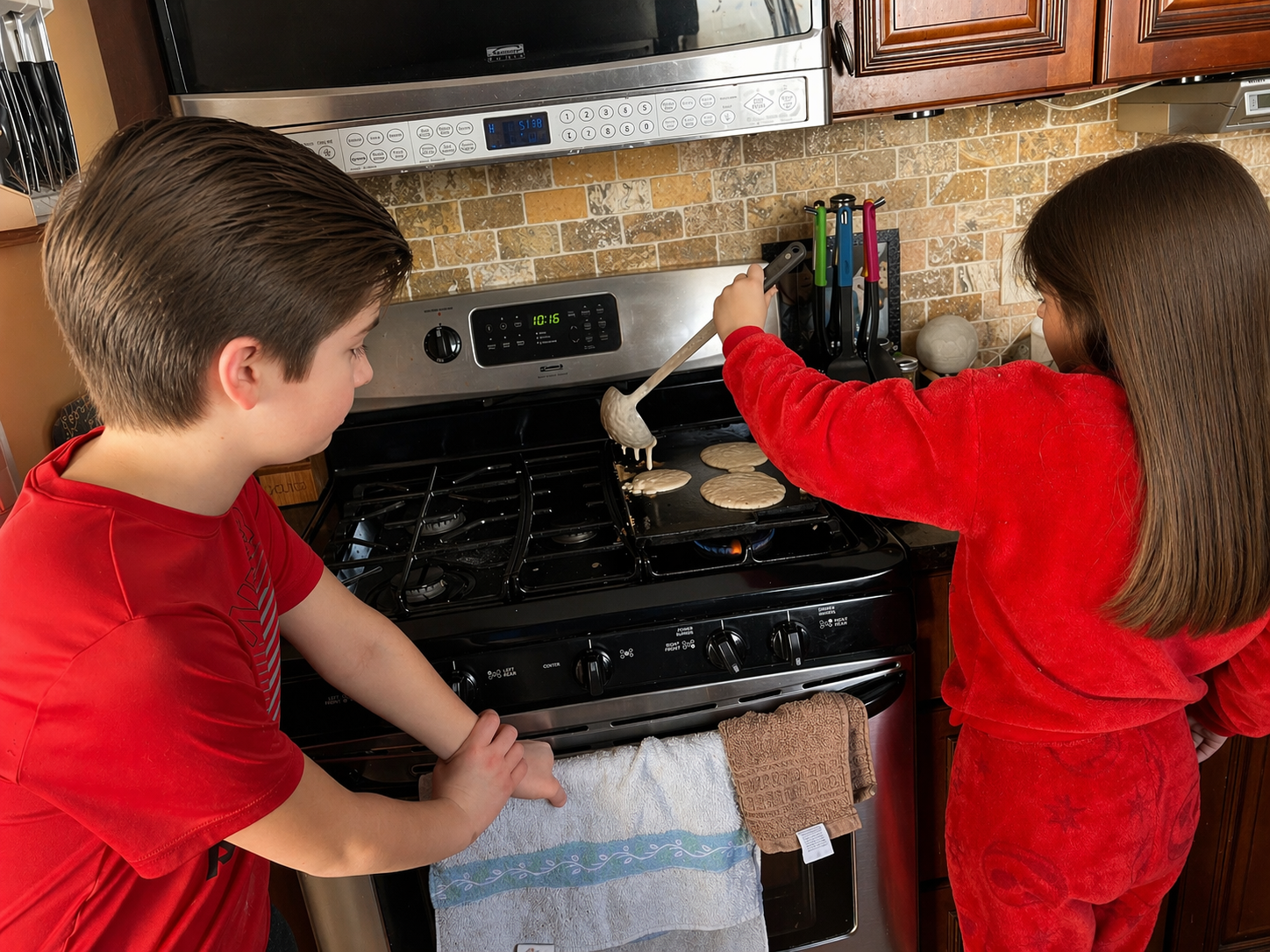
Playdates might seem like a simple way to pass the time or keep kids entertained—but they’re actually doing so much more behind the scenes. Whether it’s a planned afternoon with friends or a last-minute get-together, playdates offer meaningful benefits for both children and parents.
So… you have an already big family… Why would you want to do a playdate??? What are the benefits of having a playdate?
As a young mom, I always felt that my children needed to get socialization. Not just with siblings, but with friends. You would think that adding more kids adds more chaos, and for that you. are right, but what you also gain is peace. For the most part. I loved when my kids would have their friends over because it would. change up the mood around the house. Since my kids are all close in age, many times adding a friend, would cause the kids to all play together or separate two siblings that may have been feuding.
You may be feeling overwhelmed with having a big family and thinking, why would I add more to the mix? That feeling is completely valid—life is already full, loud, and often unpredictable. But inviting others in through playdates might actually bring more balance than you expect. Here are a few reasons why:
1. Building Social Skills Naturally
Playdates give children a chance to practice real-life social interactions. They learn how to share, take turns, communicate their needs, and navigate small conflicts. These aren’t things that can be fully taught—they’re learned through experience, and playdates provide the perfect setting.
2. Encouraging Independence
When kids are engaged with peers, they begin to rely less on constant adult direction. They make decisions, solve problems, and create their own fun. This independence builds confidence and helps them feel capable in social settings.
3. Learning Flexibility and Problem-Solving
Not every playdate goes perfectly—and that’s actually a good thing. Kids learn how to handle disagreements, adjust to different personalities, and work through challenges. These moments help develop resilience and emotional growth.
4. Strengthening Friendships
Spending time together outside of structured environments (like school) allows friendships to deepen. Kids connect in a more relaxed way, building trust and stronger bonds.
5. A Break for Parents, Too
Playdates aren’t just for kids—they can be a lifeline for parents. Whether it’s a chance to connect with another adult, share experiences, or simply enjoy a quieter moment while the kids are occupied, playdates can bring a sense of community and support.
6. Boosting Creativity and Imagination
When kids get together, their imaginations take off. They create games, build worlds, and come up with ideas that wouldn’t happen alone. Unstructured play encourages creativity in a way that structured activities often don’t.
7. Learning Social Boundaries
Through interacting with others, children start to understand personal space, respect, and boundaries. These lessons are essential and are best learned through real interaction.
Playdates don’t have to be perfect, carefully planned, or Pinterest-worthy to matter. In fact, the best ones rarely are. They’re a little messy, a little loud, and often completely unstructured—and that’s exactly where the magic happens.
Because at the end of the day, it’s not about what you do during a playdate. It’s about what your children are learning through it—how to connect, how to share space, how to build friendships in real, meaningful ways.
Adding “one more” to an already busy household can feel like too much. But sometimes, it ends up being exactly what everyone needs.
Because in the middle of the noise, the chaos, and the everyday busyness, connection has a way of making everything feel just a little bit lighter.
And those lessons last far beyond the afternoon.